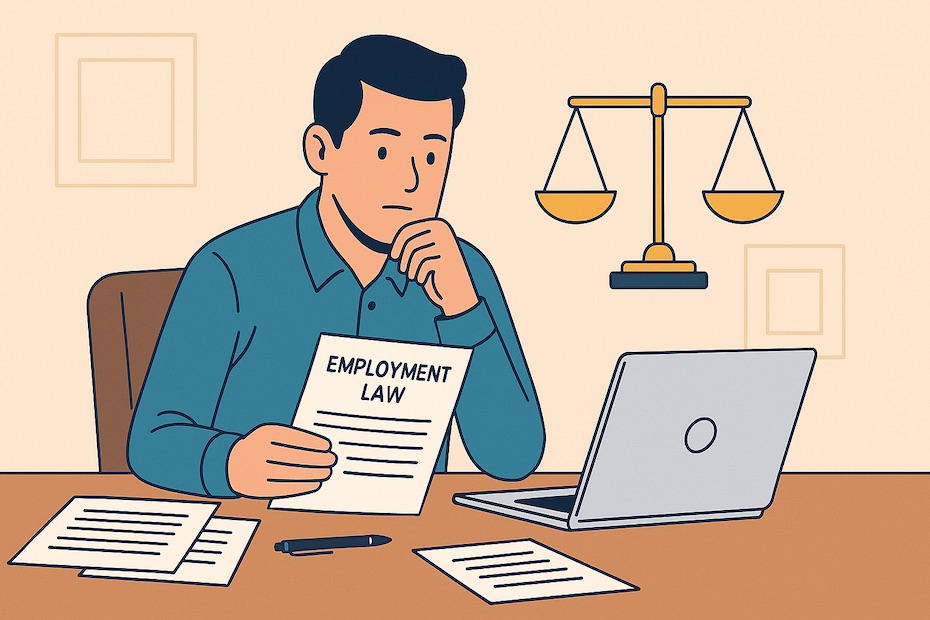
To comply with employment law as a new business owner, you must understand worker classification, wage and hour requirements, workplace policies, safety regulations, and termination rules.
Starting a business means you’re not just managing products or services—you’re managing people, and with that comes legal responsibility. This guide walks you through the essential aspects of employment law you must know to protect your business, maintain compliance, and create a fair workplace from the start.
What employment laws should new business owners be aware of?
At a minimum, you need to comply with federal, state, and local labor regulations. These laws govern hiring, pay rates, overtime, workplace safety, anti-discrimination rules, and benefits. Even small businesses are subject to many of these requirements.
For example, the Fair Labor Standards Act (FLSA) sets federal minimum wage and overtime pay rules, while the Occupational Safety and Health Act (OSHA) covers workplace safety. State and local laws may add stricter rules—such as higher minimum wages or expanded family leave rights—that you must also follow.
Failing to comply can result in lawsuits, fines, and reputational damage. Early familiarity with these laws saves you from expensive mistakes.
Why is worker classification critical?
Correct worker classification determines tax obligations, benefits eligibility, and wage protections. Misclassifying an employee as an independent contractor can lead to IRS penalties, back pay, and legal action.
An employee is typically someone whose work you control, from schedules to methods, while contractors maintain independence over how and when they perform the job. Some states also apply “ABC” tests, making it harder to classify workers as contractors.
Beyond legal compliance, proper classification builds trust and ensures fair treatment, helping you attract and retain quality talent.
What hiring and termination pitfalls should you avoid?
During hiring, avoid discriminatory practices. Interview questions should be job-related and comply with Equal Employment Opportunity Commission (EEOC) guidelines. Avoid asking about protected characteristics like age, disability, religion, or marital status.
For termination, each state has its own rules about notice, final paycheck timing, and accrued vacation payout. For instance, in California, you must provide a terminated employee’s final wages immediately, while in other states you may have until the next payday.
Documenting performance issues and following consistent disciplinary procedures helps defend against wrongful termination claims.
What should your employee handbook include?
Even if you have only a few employees, a clear, written handbook provides legal protection and sets workplace expectations. Your handbook should cover work hours, payroll schedules, leave policies, disciplinary procedures, anti-harassment rules, and safety protocols.
It should also clarify benefits eligibility, remote work rules (if applicable), and guidelines for resolving disputes. If your business operates in multiple states, note that certain policies may need to be tailored to each jurisdiction’s requirements.
Once created, review the handbook annually to ensure it reflects changes in employment law and your company’s practices.
How important is record-keeping for compliance?
Accurate and organized records are your best defense against compliance issues. You must keep payroll records, time sheets, tax forms, employee contracts, and benefits documentation for specific time periods dictated by law.
For example, under the FLSA, you must retain payroll records for at least three years. OSHA requires injury and illness records for five years. Some states impose even longer retention requirements for personnel files.
Digital recordkeeping can streamline compliance, but you must ensure secure storage and access control to protect sensitive employee data.
When can you use non-compete agreements?
Non-compete agreements are heavily regulated and, in some states, banned altogether. In states that allow them, enforceability typically depends on reasonable geographic scope, time limits, and protection of legitimate business interests.
For example, Illinois requires advance notice and minimum income thresholds for enforceable non-competes. California prohibits them entirely, with few exceptions. If you operate in multiple states, you must comply with the strictest applicable standard.
Overly broad agreements risk being thrown out by courts, so narrow your terms to truly protect confidential information or client relationships.
Should you consider Employment Practices Liability Insurance (EPLI)?
EPLI covers claims related to wrongful termination, discrimination, harassment, and other employment-related disputes. While it won’t prevent lawsuits, it can save your business from the financial shock of legal fees and settlements.
Premiums vary based on business size, claims history, and industry, but for many small businesses, the cost is modest compared to potential litigation expenses. Policies often include access to legal resources and HR support that can help you avoid problems in the first place.
Having EPLI signals that you take employee concerns seriously and are prepared to address them fairly.
Key Steps for Navigating Employment Law as a New Business Owner
- Understand federal and state labor laws
- Create clear employment contracts
- Maintain accurate payroll records
- Implement workplace safety measures
- Seek legal guidance when needed
In Conclusion
Navigating employment law as a new business owner means taking proactive steps to ensure compliance from day one. By learning your legal obligations, classifying workers accurately, setting clear policies, keeping organized records, and understanding agreements and insurance options, you create a stable foundation for growth while protecting your business from costly disputes.

Thomas J Powell is Senior Advisor at The Brehon Group with over 35 years of experience in private equity, commercial banking, and asset protection. An international lecturer and policy expert, he specializes in financial structuring, asset strategies, and addressing middle-income workforce housing shortages.