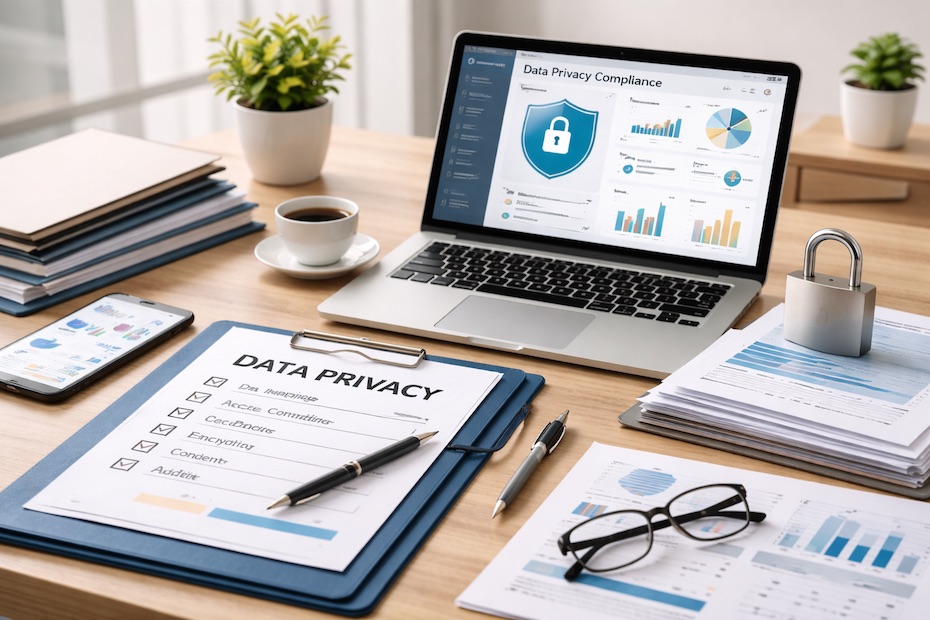
Data privacy laws require you to control how personal data is collected, stored, shared, and protected across every system your business touches. Staying compliant means aligning operations, technology, vendors, and internal accountability with legally enforceable requirements.
This article explains how modern data privacy laws affect your business today, which obligations apply in real operating environments, and how you maintain compliance without slowing execution. You will see where companies get exposed, what regulators expect, and how disciplined controls reduce risk.
What Are Data Privacy Laws and Why Do They Affect Your Business?
Data privacy laws govern how businesses handle personal data belonging to customers, employees, and partners. These laws define lawful processing, user rights, security duties, and documentation expectations.
Your business is affected the moment it collects identifiable information. That includes emails, device data, payment details, employee records, and online behavior. Digital operations ensure that personal data moves constantly through systems, vendors, and internal teams.
Regulators now focus on operational discipline rather than policy language alone. They look for evidence that privacy controls function daily, not just on paper.
Which Data Privacy Laws Apply to Your Company Right Now?
Applicability depends on who you serve, not where your headquarters sits. Geography follows the individual, not the business address.
The GDPR applies when you handle personal data of people located in the European Union. California’s CCPA and CPRA apply when you process data linked to California residents. Similar laws exist across Canada, Brazil, Japan, and many other regions.
Many small and mid-sized businesses meet applicability thresholds through routine marketing, analytics, and customer support activity. Revenue size alone does not eliminate responsibility once data volume and usage cross defined limits.
What Counts as Personal Data Under Privacy Regulations?
Personal data includes any information that identifies or can reasonably link to an individual. This definition extends well beyond names and email addresses.
Identifiers include IP addresses, device IDs, location data, account activity, transaction records, and behavioral signals. Internal data matters too. Employee files, applicant records, and access logs fall under the same obligations.
Understanding this scope prevents blind spots. Businesses often underestimate exposure by focusing only on customer-facing systems while ignoring internal platforms and third-party tools.
How Do Consent and User Rights Change Business Operations?
Modern privacy laws grant individuals enforceable rights over their data. These rights directly affect how systems, forms, and workflows operate.
Users can request access to their data, demand corrections, and ask for deletion in many jurisdictions. Your business must respond within fixed timelines and document actions taken.
Consent standards now require clarity and choice. Data collection must be explained plainly, permissions must be specific, and withdrawal must be simple. Poor consent design creates exposure even when intentions are good.
What Are the Most Common Reasons Businesses Fall Out of Compliance?
Most compliance failures stem from operational gaps rather than deliberate misuse. Weak controls create risk long before enforcement begins.
Frequent issues include excessive data retention, unrestricted internal access, outdated vendor contracts, and incomplete data mapping. Many businesses cannot answer where personal data flows across systems.
Another recurring issue involves employees. Shared credentials, manual exports, and untracked access often trigger investigations when incidents occur.
How Should You Secure Personal Data to Meet Legal Requirements?
Security expectations scale with data sensitivity and volume. Laws require reasonable safeguards, not theoretical perfection.
Encryption, access control, logging, and regular system reviews form the technical baseline. Security must extend to vendors and cloud services that process data on your behalf.
Documentation carries equal weight. Written policies, training records, incident procedures, and audit evidence show that controls exist and operate consistently.
What Is a Data Privacy Impact Assessment and When Is It Required?
A data privacy impact assessment evaluates how new activities affect personal data protection. Many laws require these assessments before launching higher-risk processing.
You conduct them when introducing new tracking tools, expanding geographically, or handling sensitive data at scale. The process identifies risk early and documents mitigation steps.
These assessments also demonstrate accountability. Regulators view them as proof that privacy risk was addressed before execution rather than after an incident.
How Do Third-Party Vendors Affect Your Compliance Exposure?
Every vendor that touches personal data becomes part of your compliance surface. Responsibility remains with your business even when processing occurs elsewhere.
You must review vendor security controls, data usage limits, breach notification duties, and subcontracting practices. Contracts must reflect current privacy obligations, not legacy terms.
Many enforcement actions originate from vendor incidents. Active oversight reduces exposure and protects continuity when external systems fail.
What Happens When a Data Breach Occurs?
Data privacy laws impose defined obligations during breaches. Notification timelines can be short and enforcement strict.
You must assess impact, document findings, notify affected individuals when required, and report to regulators under specific conditions. Delays or uncertainty increase penalties.
Preparation determines outcome. Incident response plans, escalation paths, and assigned roles reduce confusion and protect credibility during high-pressure events.
How Can You Build a Sustainable Data Privacy Compliance Program?
Sustainable compliance integrates privacy into daily operations rather than treating it as a periodic exercise. Ownership, visibility, and accountability anchor success.
Assign clear responsibility for data requests, vendor oversight, training, and incident response. Track activities continuously rather than reactively.
Review controls regularly. Laws change, systems expand, and data usage grows. Ongoing review keeps compliance aligned with reality rather than assumption.
How Do Businesses Stay Compliant With Data Privacy Laws?
- Identify all personal data
- Limit collection and retention
- Secure systems and access
- Honor user data rights
- Monitor vendors consistently
- Document every control
Build Compliance That Supports Growth, Not Friction
Data privacy compliance now shapes trust, partnerships, and long-term viability. When controls align with operations, compliance strengthens execution rather than slowing it. You gain visibility into data usage, reduce exposure, and respond faster when risks appear. Strong programs rely on discipline, not last-minute fixes. By treating privacy as an operational function, you position your business to scale without regulatory drag.

Thomas J Powell is Senior Advisor at The Brehon Group with over 35 years of experience in private equity, commercial banking, and asset protection. An international lecturer and policy expert, he specializes in financial structuring, asset strategies, and addressing middle-income workforce housing shortages.